
24/7 Emergency Line Open
Tankless Water Heaters in Longmont: Is Switching From a Tank Worth It?
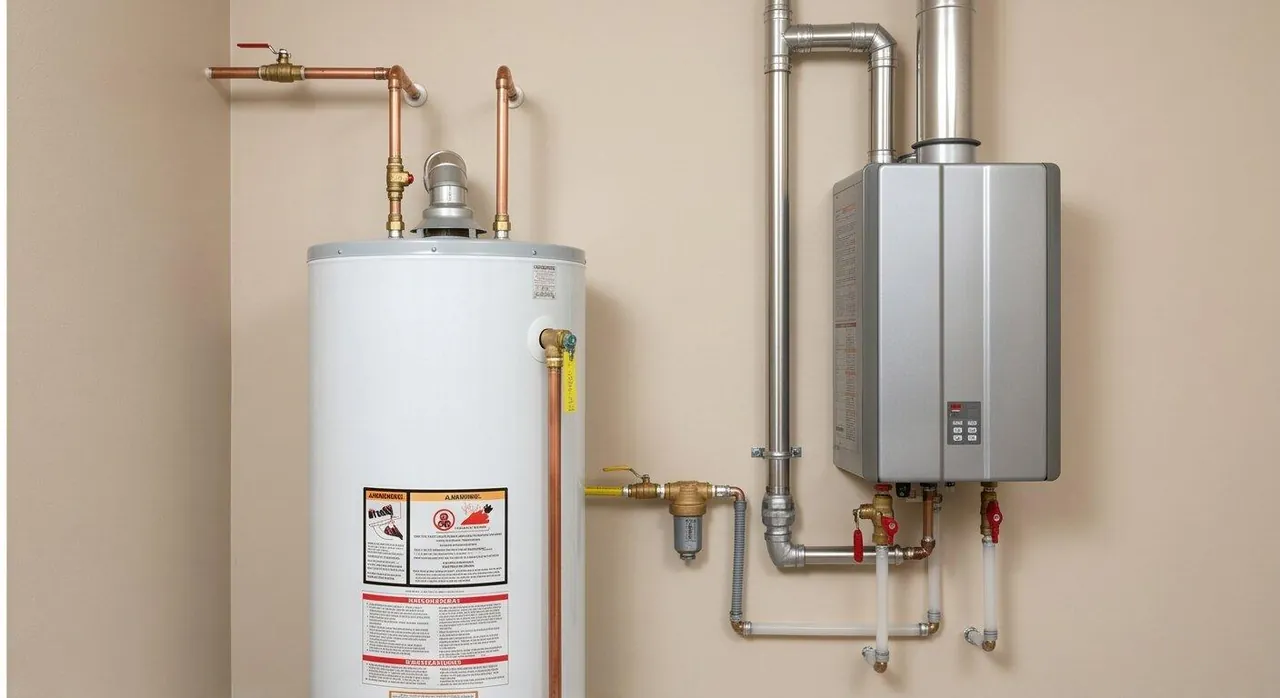
An on-demand heater swaps a storage tank for a burner or element that works only when a tap opens. The switch changes the gas line, the vent and the upkeep, so it is worth planning.
- Licensed and insured plumbers
- Same-day service when available
- 24/7 emergency dispatch
Tank or tankless: what actually changes in the house
A tankless unit heats water as it flows through a heat exchanger. Nothing is stored, so the unit never runs out in the way a tank can. Its limit is flow: how many gallons per minute it can raise to the temperature you want while several fixtures run.
Federal sizing guidance treats the two designs differently for that reason. A tank is matched to peak hour demand, and an on-demand unit is matched to the flow and temperature rise you need at the same moment.
| Question | Storage tank | Tankless |
|---|---|---|
| Hot water supply | A fixed volume, then a recovery wait | Continuous, up to the flow limit |
| Floor space | Large, and the tank sits full all day | Small and wall mounted |
| Gas or power demand | Moderate burner or element | High on demand, so lines and circuits change |
| Venting | Often a simple flue | Specified vent material, sometimes a new run |
| Upkeep | Annual flush and relief valve check | Annual descaling and an inlet filter to clean |
Neither choice is wrong in every house. The deciding facts are the gas supply, the vent path, how many fixtures run at once and whether a tank has simply reached the end of its life. The tank replacement page covers the other side of that decision.
Gas or electric: the load an on-demand unit adds
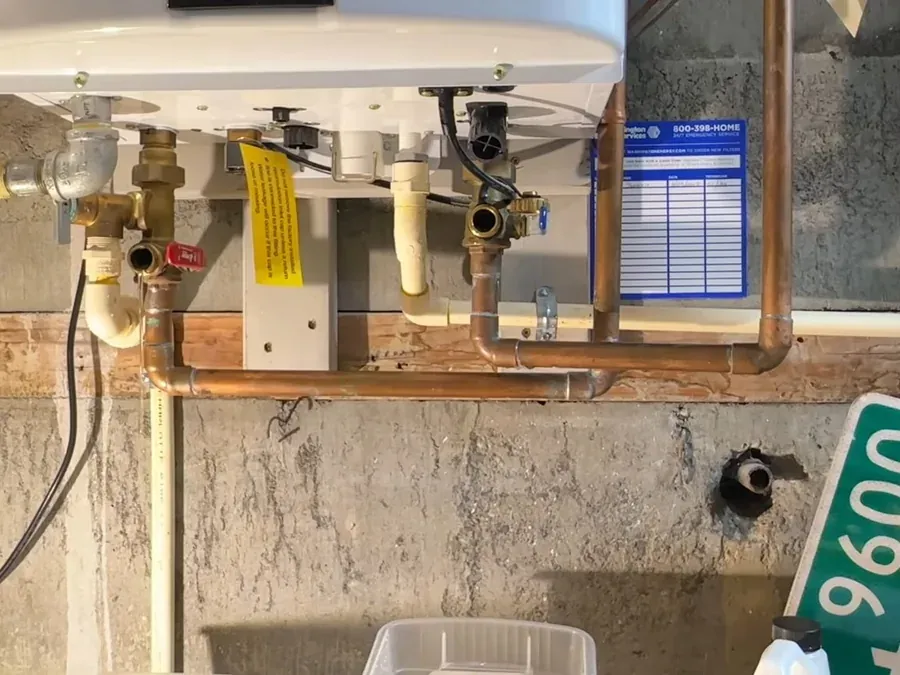
Gas models are the common pick for whole-house use, because a burner can deliver a lot of heat quickly. That is also where most conversions run into trouble. One maker's manual states that the gas supply piping for a single heater should be sized for a maximum draw of 199,000 BTU per hour, measured from the building's gas main, and that an undersized line can cut hot water flow and temperature.
The same manuals tell the installer to add up every appliance on the line, not only the new heater. A range, a dryer and a furnace share the same pipe, so a tankless swap can show that the existing run is too small. The gas line page explains how sizing is worked out and what a permit adds.
Electric on-demand units avoid the vent and the gas line but pull a heavy load when they fire. The panel, the wire size and the breaker are checked before such a unit is chosen, and some homes need electrical work that rules the option out.
Thinking about leaving the tank behind?
Describe the heater, the gas meter location and how many bathrooms run at once. The dispatcher can set up a visit to look at the line and the vent.
Venting, combustion air and the altitude setting
Gas tankless units are vented with specific materials, and the manual for each model names which ones are allowed. Manuals warn installers to use only the specified vent pipe, and to check any existing vent for punctures, cracks or blockages before reusing it. Condensing models also need a drain for the acidic water they produce, and one maker's manual has the installer fill the condensate container before first use.
Altitude is a separate step. Longmont's elevation is 4,979 feet by the city's figure, and tankless manuals address that. One states that above 2,000 feet the unit derates by 2 to 4 percent for every 1,000 feet, and that the altitude is entered in an installer mode so the control can adjust. A unit left on factory settings may not burn cleanly here.
Ask for the altitude setting to be confirmed at startup, along with a check of gas pressure while the unit fires. The manual makes the pressure check part of installation, not an optional extra.
Flushing, descaling and Longmont's soft water
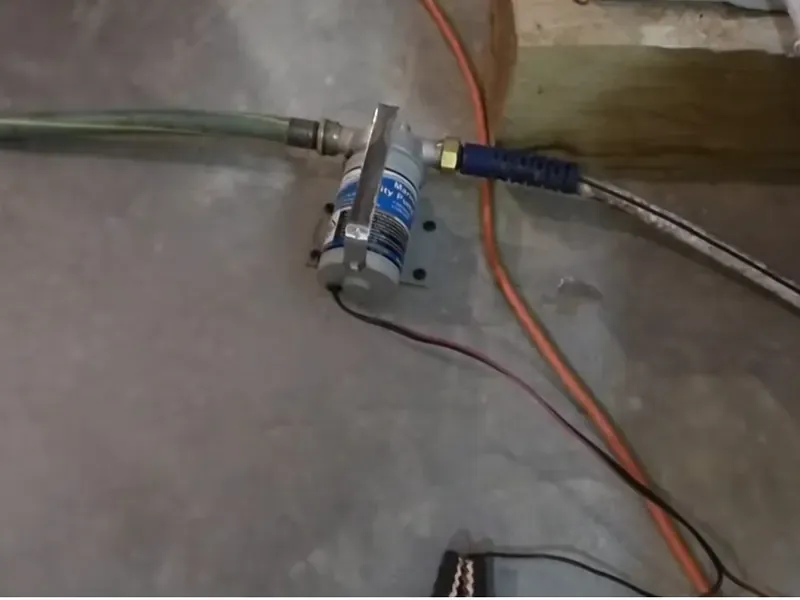
Minerals in water coat a heat exchanger over time and narrow its passages. That makes the unit work harder, trip error codes and heat less effectively. Navien's guidance is to descale at least once a year, with the interval depending on mineral content, the set temperature and how much hot water the household uses. Its procedure circulates vinegar or a descaling solution through the unit for at least 45 minutes and then flushes with fresh water for a minimum of 10 minutes.
Local water softens the picture. The City of Longmont reports hardness of 19 to 25 parts per million for 2025, which is soft. Scale builds more slowly in water like that, so the interval can be longer than in hard-water cities. The maker's manual still sets the floor, and a small inlet filter needs cleaning regardless of water quality.
Isolation valves on the hot and cold lines make the flush simple. A unit installed without them needs them added before it can be flushed properly. If the question is whether a softener is worth adding, the softener and filtration page reads the city report line by line.
Cold spots in the shower with a tankless unit?
Flow, scale and a blocked filter all cause it. A short call can sort the likely cause before a visit is booked.
Converting from a tank: what the job includes
Replacing a tank with an on-demand unit is a larger project than swapping one tank for another. The scope usually includes the items below, and each should be named in a written scope before work starts.
- Check the gas pipe size against the total load and upsize it if it falls short.
- Plan a vent path to the outdoors and remove the old flue connection.
- Run a condensate drain for a condensing model.
- Add isolation valves for later flushing and a power outlet for the controls.
- Install the relief valve discharge and test every joint.
- Set the altitude, check gas pressure and confirm the temperature setting.
Longmont's permit list names water heater installation as work that needs a permit, and tankless conversions fall under it. Building Services at 385 Kimbark Street can confirm what a given job requires. Cost questions are covered on the cost page, where each figure comes with a source.
Troubleshooting a tankless unit that has stopped heating
Most no-heat calls on on-demand units trace back to a short list of causes. Check the simple items before calling.
- Hot, cold, hot again: often a flow issue, since these units need a minimum flow to stay lit.
- Error code on the display: scale or a blocked inlet filter are common triggers; the manual explains each code.
- No ignition on a gas unit: check that the gas valve is open and that other gas appliances work.
- Lukewarm with several taps open: the unit may be at its flow limit and can only heat so much at once.
- Vent or intake blocked: snow, a nest or a collapsed section can shut a unit down.
Plumbers can service the common brands. Tell the dispatcher the make and model and the code on the display, and mention whether the unit has ever been flushed. That history changes the first thing a plumber checks.
Same-day and emergency tankless service
A unit that quits in winter is an urgent problem, and a gas smell is an emergency. Dispatch answers all day and night, and the dispatcher can often fit in a same-day visit if the schedule allows. A visit window is confirmed by phone.
Manuals, federal guidance and city sources
- DOE guidance on matching heater size to demand
- Bosch tankless installation manual, gas supply sizing
- Bosch tankless manual, effect of an undersized gas line
- Noritz condensing tankless installation manual
- Mascot tankless manual, high altitude setting
- Navien, how to descale a tankless unit
- City of Longmont, about Longmont and elevation
- City of Longmont, water quality report for 2025
- City of Longmont, building permit list
Planning a tankless switch or chasing a fault?
Describe the unit and what it is doing, and a plumber serving your area can say whether the gas line and vent are ready.
- Licensed and insured plumbers
- Same-day service when available
- 24/7 emergency dispatch