
24/7 Emergency Line Open
Repiping and Pipe Repair in Longmont: Patch a Section or Replace the Lines
One bad section of pipe can be patched. A house full of aging lines that keep leaking is a different problem, and this page is about telling the two apart.
- Licensed and insured plumbers
- Same-day service when available
- 24/7 emergency dispatch
A pipe has burst or cracked: the first minutes
Water spreading from a split pipe is a race between you and the clock. A callers' account is often the same: water coming through a ceiling or out of a wall, and no idea where the shutoff is.
- Close the main shutoff valve where the line enters the house, and turn the handle fully.
- Open the lowest faucet to drain the lines, and open one upstairs tap to let air in.
- Stay clear of wet electrical outlets and fixtures, and switch off power to a soaked area at the panel only if you can reach it dry.
- Lift rugs, boxes and furniture clear of the water, and take photos of the damage before any cleanup.
- Call for a plumber, and call the {a('water-damage-restoration','water damage line')} if materials are soaked.
If you do not know where the main valve is, find it now, before something breaks. A valve that has not turned in years should be tested and replaced if it sticks, which the water line page covers.
Pinhole leaks: when patching stops making sense
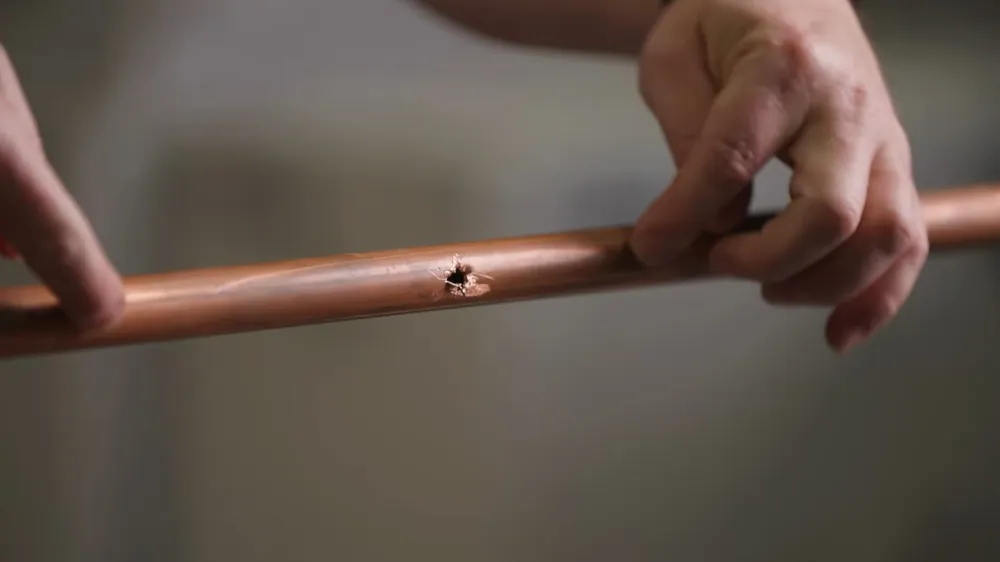
A pinhole is a tiny puncture, often from the inside of the pipe wall, that sprays a fine mist or leaves a green crust on copper. One pinhole in an otherwise sound line is a repair. Several in different rooms are a message about the whole system.
| Pattern | What it suggests | Usual path |
|---|---|---|
| One pinhole, rest of the line looks clean | A local weak spot | Cut out and replace that section |
| A second leak within a year or two | Pipe wall wearing along its length | Compare more repairs with a partial repipe |
| Leaks in several rooms | System-wide wear | Price a whole-house repipe |
| Stains and crust at many joints | Fitting or solder failure | Inspect every joint in the run |
Each repair opens a wall, patches drywall and costs a visit. Past a certain point, the visits add up to more disruption than one planned replacement would have caused. That point is a judgement call, and a plumber can lay out both paths with the access needed for each.
Hidden pinholes show up first as a rising water bill or a damp stain. The leak detection page explains how plumbers find them before a wall is opened.
Third leak in the same house?
Pipe material and the leak pattern decide whether repair or repiping makes more sense, and a visit can sort that out.
Which pipe is in the wall: copper, galvanized, PEX or polybutylene
The material tells a plumber what to expect. Different pipes fail in different ways, and some are replaced on age alone.
| Material | How it fails | What to do |
|---|---|---|
| Copper | Pinholes, joint failures and corrosion | Repair a section, or repipe after repeated leaks |
| Galvanized steel | Rust inside narrows the pipe and cuts flow | Plan replacement, since the damage is inside |
| Polybutylene (gray plastic) | Fittings and pipe fail without warning | Replace, ideally before a failure |
| PEX | Mostly fitting or installation faults | Repair the fitting or section |
| CPVC | Becomes brittle with age and heat | Replace sections that crack |
| Cast iron, PVC drain | Corrosion in cast iron, cracks in plastic | Repair the drain run, see drain and sewer pages |
Polybutylene and the 1978 to 1995 window
Polybutylene, called PB, is a flexible gray plastic pipe that builders installed in millions of American homes from about 1978 to 1995. Makers of the pipe settled a class-action lawsuit in 1995. Pipe installed in that period may carry "PB" or a similar mark printed on it, along with copper crimp rings at the fittings.
Census-based summaries put the median year built for Longmont homes at 1991, which means many houses here were built inside or close to that window. That does not mean any particular house has the pipe. A plumber can look under sinks, at the water heater and at the meter, and say what is there. PB leaks tend to come from inside the pipe, so a clean outside tells you little.
Whole-house repiping: what the work involves
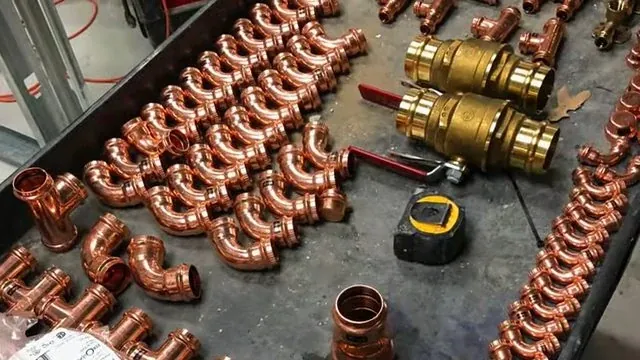
A repipe replaces the supply lines throughout the house, normally with PEX or copper, from the main shutoff to each fixture. Walls and ceilings are opened at planned access points, the new lines are run and pressure tested, and the openings are patched.
Changes to a building's plumbing systems appear on Longmont's list of permitted work, which makes a repipe permitted work. Permit paperwork goes through city Building Services. Water is off during parts of the job, and the plumber should tell you which fixtures are out and when.
- Ask which material is planned and why it suits your water and layout.
- Ask how many access openings are expected and who patches them.
- Ask whether the permit is included and when inspections are expected.
- Ask how the water shutoff and fixture hookups will be handled day to day.
Under-slab and underground lines
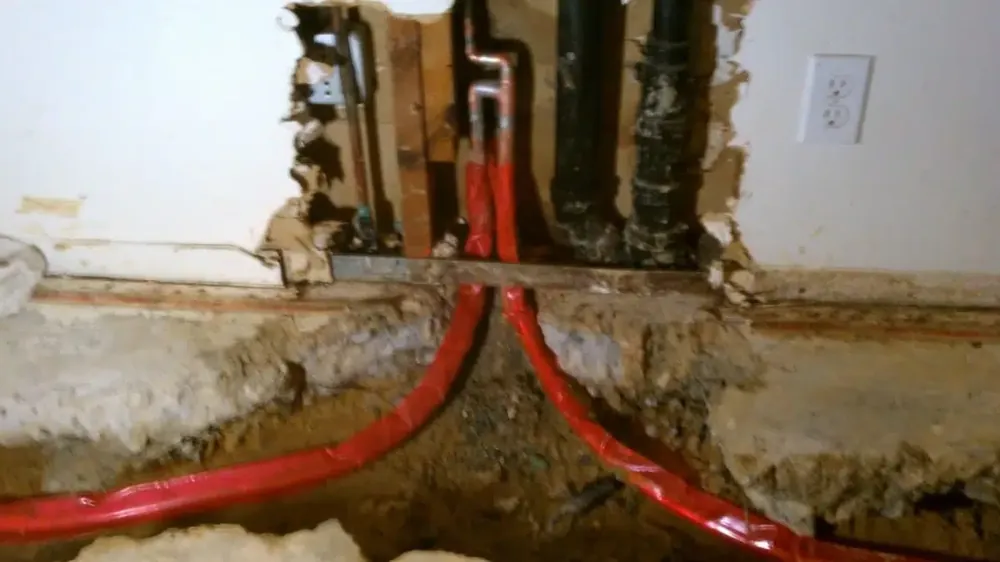
A leak in a line under a concrete floor or in the yard is harder to repair. The first step is locating it, and the slab leak page explains how leaks under a floor are found without tearing it up. The repair then has three typical routes: break into the slab at the leak, reroute the line overhead through the walls, or line the pipe.
Rerouting suits a line that has failed more than once under the floor, since a new path through the walls leaves the old one abandoned. For underground supply lines, the work depends on where the leak is, and a call to 811 comes before any digging.
Water under the floor or in the yard?
Describe the damp spot or the bill increase, and the dispatcher can arrange a visit to locate the line.
Frozen pipes: thawing and the freeze risk
Frozen pipes are a seasonal problem here. The City of Longmont issues winter weather alerts for snow and freezing temperatures, and pipes in unheated spaces, along outside walls or in garages are the ones that freeze first.
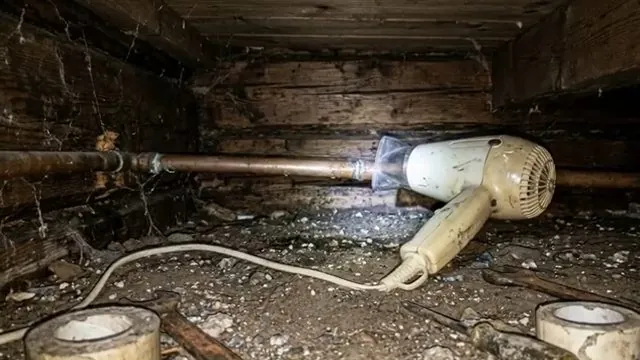
If a tap runs only a trickle in freezing weather, shut off the water at the main before anything else, since ice can hide a crack that leaks once it thaws. Warm the pipe slowly with a hair dryer, a space heater kept in sight or towels soaked in hot water. Do not use an open flame. A Colorado city's guidance adds that once the pipe thaws, you should turn the water back on slowly and check for leaks, because freezing causes small cracks in pipes and joints.
Crack a faucet on the line farthest from where water enters the house during a hard freeze, as Denver Water advises. Moving water is harder to freeze.
Cast iron, PVC and CPVC: the drain side
Not every pipe problem is on the supply side. Old cast iron drains rust from the inside and crack, PVC cracks from impact or from heat, and joints separate. A slow drain that returns after cleaning can point to a damaged section, and a camera shows it. The drain cleaning page covers when a clog is really a pipe failure, and the sewer line page covers the buried run.
One query that turns up in this area is a cracked water pump. Longmont is on city water, and a pump failure belongs to a different trade from pipe repair, so it is not covered here.
Emergency and same-day pipe repair
A burst pipe is an emergency. Phones are answered around the clock, and same-day service can be arranged when a slot is open. Shut off the main first, and a plumber serving your area will ask what you see so the right parts come along.
City, state and news sources used
- City of Longmont, building permit list
- City of Longmont, winter weather alert for snow and freezing temperatures
- City of Westminster, preventing frozen water pipes
- Denver Water, protecting pipes in unheated spaces
- WRAL, polybutylene pipes and the 1995 settlement
- ABC15, polybutylene identification and failure
- Neilsberg, Longmont housing summary (median year built, secondary source)
Pipe leaking now or leaking again?
Close the main, then call. Describe the failure and the dispatcher can line up a plumber who serves your area.
- Licensed and insured plumbers
- Same-day service when available
- 24/7 emergency dispatch