
24/7 Emergency Line Open
Slab Leak Detection in Longmont, CO: Steps to Take First
A warm spot on the floor or the sound of water with every tap closed can point to a pipe under the concrete. Confirm what you have, then call to locate the leak.
- Licensed and insured plumbers
- Same-day service when available
- 24/7 emergency dispatch
Confirm what kind of floor you have before assuming a slab leak
A slab leak is a leak in a pipe that runs under or inside a concrete slab floor. Whether your house has one is a question about your own house, not about Longmont in general, and this page makes no claim about what foundation any given home sits on. A home inspection report, the original plans or a look at the lowest level of the house answers the question quickly.
The answer changes the plan. If the lowest floor is a slab, a leak under it can be located without opening anything. If the house has a basement or crawl space, the same symptoms often come from lines that are easier to reach, and the general leak detection page covers that search.
Signs of a slab leak you can check from the living room
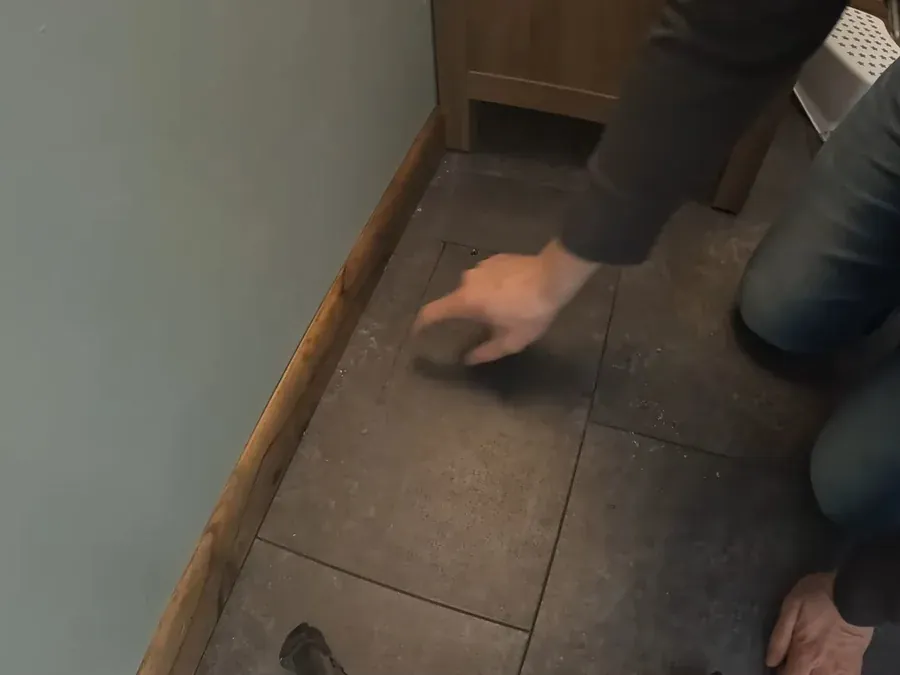
Slab leaks hide under flooring, so the clues are indirect. Several of them showing up together make the case stronger than any one alone.
- A warm or hot patch on a tile or concrete floor, which often means a hot water line is leaking beneath it
- The sound of water running or hissing when every tap and appliance is off
- A water meter that keeps moving with the house quiet
- A water bill that climbs with no change in habits
- Damp carpet, buckled wood flooring or grout that stays wet in one area
- A musty smell, or mold-like spotting along baseboards
- Low hot water pressure, or a water heater that seems to run constantly
Hot lines announce themselves with warmth, while cold lines leak quietly and usually show up as dampness or a steady rise in the bill. A cold line under the slab can leak for a long time before the floor shows anything at all.
Slab leak detection: locating the leak without tearing up the floor
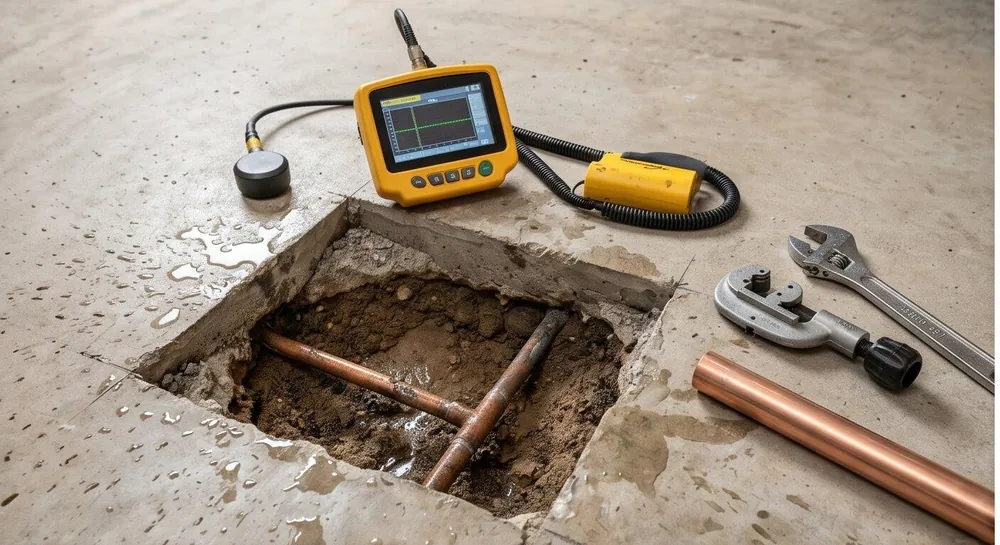
Locating the leak is the step that decides what the repair will cost in time and disruption. A plumber working from the surface listens along the floor for the sound of escaping water, scans for heat where a hot line is leaking, and uses pressure tests to work out which line is losing water.
| Test | What it tells the plumber |
|---|---|
| Listening with electronic equipment | Where the sound of escaping water is loudest along the floor |
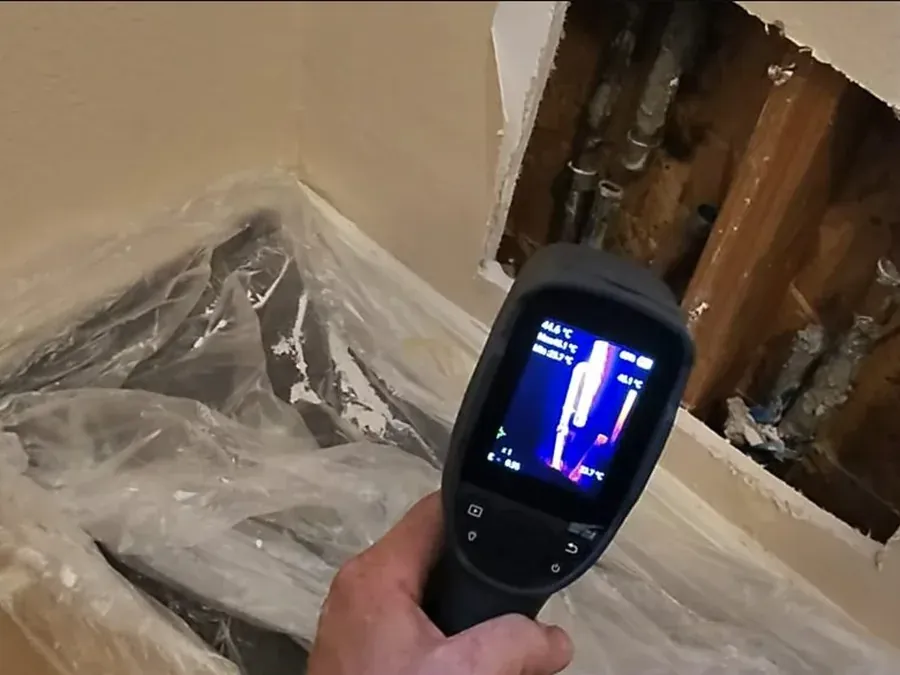
| Thermal imaging | Warm areas that mark a leaking hot line under the surface |
| Pressure test on the hot and cold lines separately | Which system is losing water, and whether a single branch is the culprit |
| Isolating individual fixtures and branches | Which section of pipe to focus on before any marking is done |
Once the spot is marked on the floor, the plumber can explain how far it sits from walls and fixtures, and what lies between the leak and the nearest open access. That map drives every repair option below. Leaks that sit in a drain line under the slab are a different pipe and a different fix, and the plumber will say so if the findings point there.
A pipe under the floor will not repair itself
Say what you hear and where the floor feels warm. A plumber serving your area can be sent when one is available, including nights and weekends.
Slab leak repair: tunnel, reroute or epoxy
There is no single right method. Each one trades speed, disruption and how long the fix is expected to last, and the pipe material and the location of the leak narrow the choices.
| Method | How it works | Usually fits when |
|---|---|---|
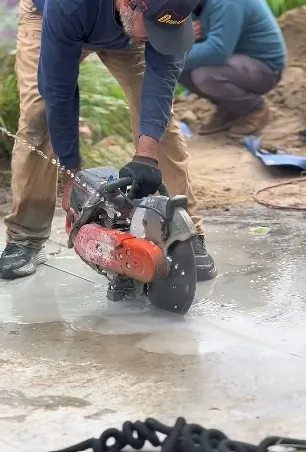
| Spot repair through the floor | A section of the slab is opened above the leak and the pipe is repaired, then the floor is patched | The leak is a single point and the floor above is easy to restore |
| Tunneling under the slab | Access is dug from outside the house or from a nearby open area, so the finished floor stays in place | The leak is under a floor that is costly to disturb |
| Reroute | The old line is abandoned and new pipe runs overhead through walls or the attic | The line under the slab has failed more than once, or the leak is hard to reach |
| Epoxy or lining | A coating or liner is applied inside the existing pipe, which avoids digging | The pipe is otherwise intact and the plumber confirms the method suits it |
Rerouting is closely related to repiping, and when several lines under the slab are suspect the conversation shifts to repiping. Ask the plumber whether the reroute covers hot lines, cold lines or both, and what happens to the old pipe that stays buried.
Trenchless approaches and linings are not available for every pipe or every layout. A plumber should explain why one method fits your house before recommending it, and should tell you if more than one would work.
Foundation and concrete: what a leak under the floor can mean
Water under a slab is rarely just a plumbing problem if it keeps running. The Colorado Geological Survey describes expansive soils, clays that swell when wet and shrink as they dry, as one of the state's most costly and widespread geologic hazards. It reports that the swelling soil can expand by 10 percent or more and push on foundations and slabs with a force of 20,000 pounds per square foot or greater.
That does not mean a leak will crack a slab. Soil varies lot by lot, and no one can say from a webpage whether the ground under a particular home swells. What it does mean is that a leak under a slab is worth fixing promptly, and that signs of movement deserve attention after the plumbing is done.
- New cracks in a concrete floor, walls or ceilings
- Doors or windows that begin sticking
- A floor that feels uneven or has a visible raised area
- Gaps opening between baseboards and walls
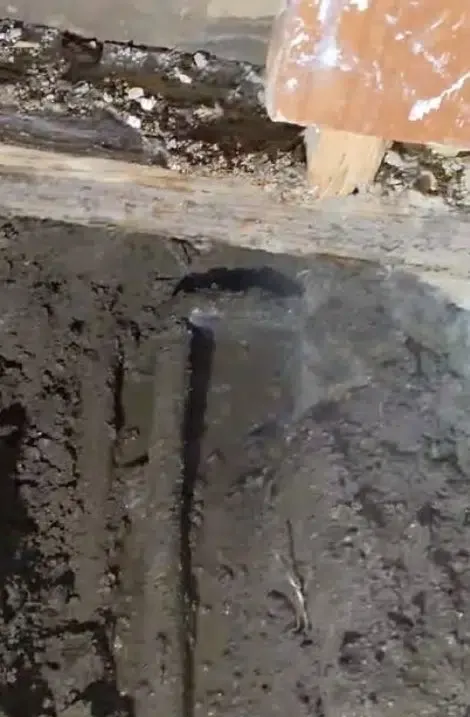
If any of these appear after a leak, tell the plumber and consider a structural engineer's opinion. The plumber repairs the pipe, while an engineer judges movement in the foundation. Those are separate questions, and one professional should not be asked to answer both.
Floor warm, bill climbing?
Those two signs together deserve a call today. The dispatch line answers around the clock, and the dispatcher can walk you through the first steps.
Damage, insurance and the paperwork that follows
A leak that ran under a slab for weeks can leave damp subfloor, stained walls and mold-prone materials above it. Photograph the damage, keep the plumbing invoice and findings, and ask the insurer what documentation it needs. Coverage questions belong with the insurance company; the plumber's job is to show what failed and where.
The wet materials need to come out and dry quickly, and water damage restoration handles removal and drying after the pipe work is done or while it is under way.
Questions to ask before the floor is opened
- How did you locate the leak, and can I see the result?
- Which repair methods are possible for this pipe, and why do you recommend one?
- What will be patched afterward, and who handles flooring?
- Are other lines under the slab the same age and material?
Hear water under the floor? Call before the damage spreads
Say what you see and hear, and a plumber serving your area will help you plan the next step.
- Licensed and insured plumbers
- Same-day service when available
- 24/7 emergency dispatch